

Intelligenceoriginal.com · Finance & Power · September 24, 2026
F i n a n c e & P o w e r
The Last Honest Banker
For nearly a century, the phrase Swiss bank account meant one thing above all others: secrecy so absolute it amounted to a kind of sovereignty. Dictators deposited there. Oligarchs sheltered there. American dentists hid there. Then, in 2007, a private banker from Boston named Bradley Birkenfeld walked into the offices of the United States Department of Justice and started talking. What followed was not simply the end of a banking tradition. It was the unravelling of an arrangement — between money, silence, and the state — that had held, more or less intact, for ninety years.
By the Intelligence Original Editorial Desk · September 24, 2026 · 20 min read
In October 2001, Bradley Birkenfeld arrived in Geneva as a newly hired private banker at UBS, the largest bank in Switzerland and one of the largest in the world. He was thirty-six years old, Boston-born, a graduate of Norwich University in Vermont, and had spent the preceding decade working his way through the private banking divisions of several European institutions — Credit Suisse First Boston, Barclays Bank, and others — acquiring, along the way, a facility for the language of wealth management, the social codes of the ultra-high-net-worth world, and a precise understanding of what his clients wanted, which was, in most cases, the same thing: for their money to be somewhere that their governments, their spouses, their business partners, and their tax authorities could not find it.
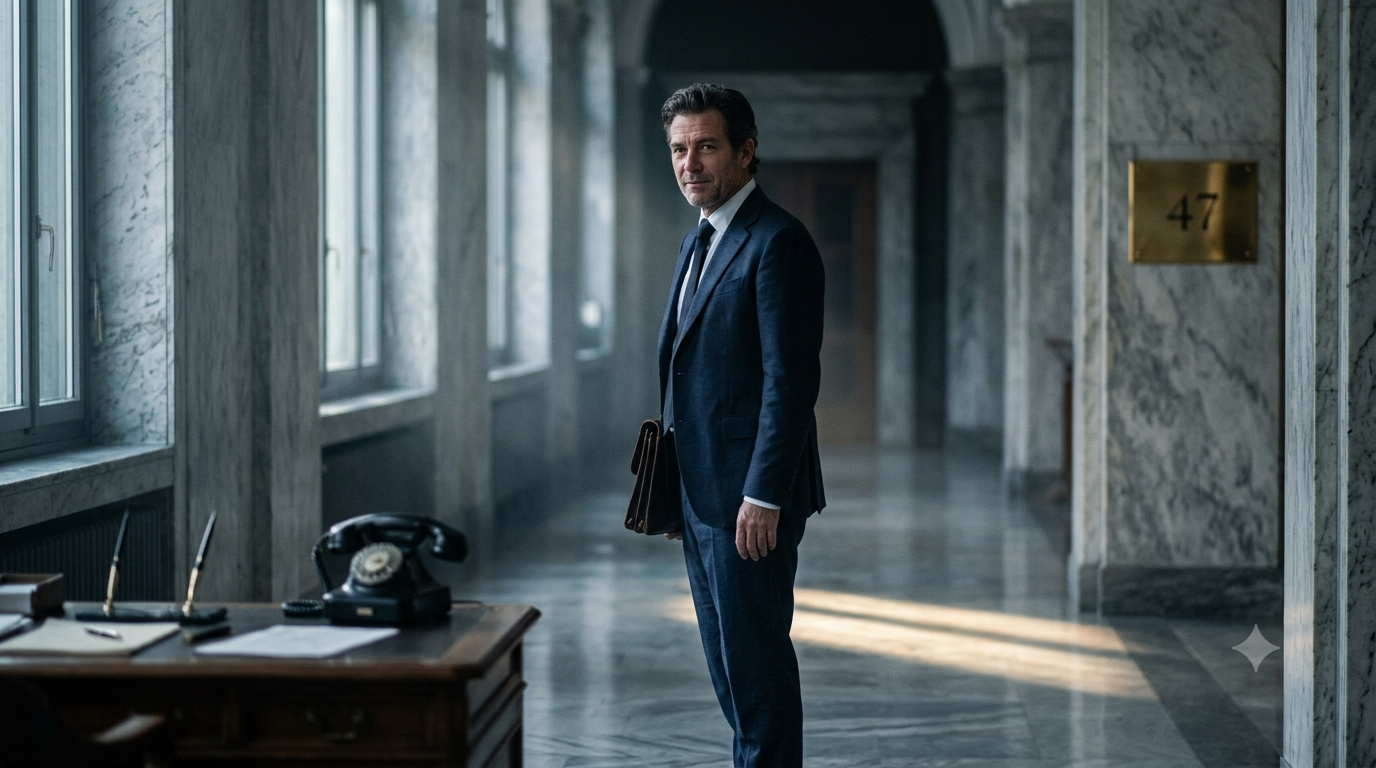
UBS provided this service with extraordinary thoroughness. The clients Birkenfeld worked with held accounts that did not appear on any document that crossed a national border. Their names were replaced, in internal communications, with code numbers. The assets inside the accounts — stocks, bonds, cash, occasionally diamonds carried in toothpaste tubes through customs, a practice Birkenfeld would later describe to a US Senate subcommittee with a specificity that suggested something other than theoretical knowledge — generated income that was not reported to any tax authority. This was not an edge case or an aberration. It was the product, systematically organised and professionally staffed, of a legal architecture that Switzerland had built and maintained since 1934, when Article 47 of the Federal Banking Act made the disclosure of client information a criminal offence.
Birkenfeld worked inside this architecture for six years. He opened accounts. He arranged transfers. He flew to the United States — where soliciting clients for undeclared accounts was, separately, a violation of the US-Switzerland tax treaty — and attended art fairs and sporting events to cultivate wealthy Americans. He helped one client, a California real-estate developer named Igor Olenicoff, conceal approximately two hundred million dollars. He was, by any reasonable professional assessment, good at his job.
Then, in 2006, he found an internal document at UBS that changed his understanding of his position. The document made clear that the bank, in the event of legal exposure, intended to hold its bankers — not its executives, not its compliance department, not its board — individually liable for the practices they had been trained to perform and rewarded for performing. He attempted to raise this internally. The internal process produced nothing. He resigned. And in 2007, he called the Financial Times from a phone he did not usually use and said, in the words the paper’s Zurich correspondent would later write down and publish: “My name is Tarantula. That is not my real name. But the information I will provide will put my life in danger and be the end of Swiss bank secrecy.”
He was not wrong about the last part.
I. The Architecture of Silence
How Switzerland Built the World’s Most Trusted Vault, and What It Was Used For
The 1934 Federal Banking Act is usually described as a response to the pressures of the Nazi regime — a legal firewall designed to prevent German authorities from identifying and seizing the assets of Jewish account holders whose money had found refuge in Swiss institutions. This origin story, convenient and morally coherent, has been repeated so often that it has acquired the authority of fact. It is also, historians of Swiss finance have established, substantially incomplete. The banking secrecy provisions of 1934 were primarily driven by a domestic scandal — the revelation that French and Belgian politicians had been using Swiss accounts to evade their own taxes — and by the desire of Swiss banks to prevent their own staff from leaking client information to foreign governments or competitors. The Nazis provided a useful retrospective justification. They were not the primary cause.
What Article 47 created was not merely a privacy rule but a political economy. Switzerland exported watches, chocolate, and pharmaceutical products. It also exported a service — confidentiality — that was, in important respects, more valuable than any manufactured good, because it was available nowhere else at the same standard of reliability and legal protection. Bankers who disclosed client information faced criminal prosecution. The state was not merely a passive enabler; it was an active participant in the system, providing the legal teeth that made Swiss bank secrecy credible to the world’s wealthy, who had tried privacy arrangements in other jurisdictions and found them wanting.
The clients who came were not exclusively the villainous. There were political refugees who genuinely needed the protection of anonymity from authoritarian governments. There were businesspeople in countries with dysfunctional legal systems who had rational reasons to hold assets outside the reach of their domestic courts. There were family offices managing inherited wealth across multiple generations and multiple jurisdictions, for whom Swiss institutions offered stability and professional competence that their home countries’ banking systems could not match. The Swiss banks were careful to cultivate these legitimate clients, and equally careful not to examine too closely the nature of the funds arriving alongside them.
“In essence, bank secrecy is analogous to criminal racketeering — and the Swiss government, along with every Swiss private banker, is a co-conspirator.”
— Bradley Birkenfeld, writing in The American Interest, 2013
The consequence, across nine decades, was the accumulation in Switzerland of approximately two and a half trillion dollars in offshore assets — a figure that, while subject to significant methodological uncertainty, represents the most conservative estimate of what the system held at its peak. This was not money earned in Switzerland. It was money sheltered there. The distinction mattered enormously for the global economy and for the tax revenues of the countries whose citizens had deposited it, and not at all, in practice, for the fee income of the institutions managing it.
II. The Man with the Toothpaste Tube
What Bradley Birkenfeld Did, and What Happened to Him When He Said So
The testimony Birkenfeld provided to the United States Department of Justice, the Internal Revenue Service, the Securities and Exchange Commission, and the Senate Permanent Subcommittee on Investigations beginning in 2007 was, in the assessment of every institution that subsequently evaluated it, exceptional in its detail and consequence. He described, from the inside, how UBS recruited American clients at art fairs and yacht shows. He described the encrypted laptops that bankers carried into the United States. He described the cover stories they were trained to use when asked about the purpose of their visits. He described the internal culture of a bank that knew, institutionally and explicitly, that what it was doing violated American law and that had constructed an elaborate system of plausible deniability specifically in order to continue doing it.
The results were historically significant. UBS paid $780 million in fines and surrendered the names of 4,450 American account holders — the first time in history that a Swiss bank had handed client information to a foreign government at that scale. The disclosure triggered a cascade: more than 43,000 Americans subsequently came forward voluntarily to disclose previously hidden accounts, generating more than six billion dollars in recovered taxes and penalties. In 2014, Credit Suisse pleaded guilty to helping thousands of American clients evade taxes and paid $2.6 billion — subsequently reduced to $1.3 billion — in settlement. In May 2025, Credit Suisse Services AG, by then absorbed into UBS following the emergency rescue of 2023, pleaded guilty again, this time to violating the 2014 settlement by concealing more than four billion dollars in at least 475 accounts between 2010 and 2021. The fine was $511 million.
The treatment of Birkenfeld himself by the American legal system remains one of the more instructive episodes in the recent history of the relationship between whistleblowers and the governments they inform. He provided information that led directly to billions in recovered revenue and to one of the most consequential regulatory outcomes in the history of international finance. The Department of Justice prosecuted him anyway — specifically for his role in concealing the assets of Igor Olenicoff, the client he had explicitly named and whose case was built substantially on Birkenfeld’s own disclosures. He pleaded guilty and was sentenced to forty months in federal prison. He served thirty of them.
In 2012, while still on probation, he received a cheque from the Internal Revenue Service for $104 million — the largest whistleblower reward in the twenty-five-year history of federal qui tam law. He deposited it in a Swiss bank account. The irony was apparently intentional.
“I sought out the DOJ, the IRS, the SEC, and the US Senate in 2007. And when I gave them this information, they were hostile towards me from day one.”
— Bradley Birkenfeld, in interview
III. The Avalanche
FATCA, the Automatic Exchange, and the Systematic Dismantling of a Ninety-Year Arrangement
The Birkenfeld disclosures did not simply produce fines and criminal pleas. They produced legislation. In 2010, the United States passed the Foreign Account Tax Compliance Act — FATCA — which required every foreign financial institution in the world to report information on accounts held by American citizens to the Internal Revenue Service, on pain of a thirty percent withholding tax on any US-source income flowing through the non-compliant institution. The provision was extraterritorial in scope: it applied to banks in Zurich, Liechtenstein, Singapore, and the Cayman Islands with identical force. It made compliance mandatory and non-compliance commercially catastrophic.
Switzerland, after a period of resistance that was dignified but ultimately ineffectual, capitulated. It ratified a FATCA intergovernmental agreement with the United States. It subsequently agreed, in 2017, to the Common Reporting Standard — the OECD’s multilateral equivalent of FATCA, applicable to the citizens of more than a hundred participating jurisdictions. Under the CRS, Swiss banks now transmit, once a year, to the tax authority of every participating country, the name, address, tax identification number, account number, year-end balance, and income of every non-resident client. The transmission is automatic. It requires no court order, no treaty request, no demonstration of cause. It simply happens, every September, for the accounts of approximately a hundred countries’ worth of clients.
What this means, in practice, is that the Swiss bank account of a French resident is now no more private from the French tax authority than a French domestic account. The secrecy that Article 47 created for non-residents is, for the citizens of the countries participating in automatic exchange, functionally dead. The Swiss Bankers Association acknowledges this while maintaining that Swiss banks retain competitive advantages in other areas — expertise, stability, service quality, the particular Swiss combination of political neutrality and legal reliability. These claims are not entirely without foundation. They are also, in the assessment of the Tax Justice Network, which ranked Switzerland the second-most-significant enabler of financial secrecy in its 2025 index of 141 nations, somewhat overstated.
The number of private banks in Switzerland fell from a hundred and sixty in 2010 to approximately eighty by the end of 2025. Industry analysts predict that around fifty institutions will remain by 2030. The consolidation wave of 2024 and 2025 alone produced nine major transactions in ten months. The sector’s largest institutions have adapted — UBS, Julius Baer, Pictet, Lombard Odier — by shifting their business model away from secrecy and toward genuine wealth management: investment advice, estate planning, structured products, services that justify their fees through expertise rather than opacity. The smaller institutions, whose competitive position had been built entirely on the opacity and which had nothing else to offer, are disappearing.
IV. The Loopholes That Remain
What the Reforms Did Not Touch, and Where the Money Went Instead
The automatic exchange of information applies, under the CRS, only to account holders who are tax-resident abroad. Swiss residents are exempt — their domestic account information is not shared with any foreign authority, and the Swiss Federal Tax Administration receives no automatic feed. The domestic enforcement mechanism remains, as it has been since the 1940s, a thirty-five percent withholding tax on interest and dividends paid to Swiss residents. The system assumes that this withholding constitutes adequate domestic enforcement. Critics note that it assumes no such thing — it simply allows the Swiss government to collect a flat rate from domestic accounts while permitting the underlying balance and identity to remain obscure.
More significant is what happened to the assets that departed Switzerland. The money did not, in most cases, return home to be taxed. It migrated. To Singapore, which has built a private banking sector of comparable sophistication and considerably less international scrutiny. To Dubai, which has positioned itself as the Switzerland of the Global South — politically neutral, legally opaque to non-participating jurisdictions, and staffed with bankers trained in exactly the techniques that the Swiss system exported across four decades. To Delaware and South Dakota, two American states whose trust and shell company legislation provides confidentiality protections that, in the assessment of the Tax Justice Network, make the United States the world’s largest single enabler of financial secrecy — a finding that American politicians discussing offshore tax evasion have consistently declined to engage with.
Switzerland has also been slow to address the question of beneficial ownership — the identity of the natural persons who ultimately own assets held through shell companies, trusts, and foundations. In 2026, the Swiss government announced plans to create a register of the owners of assets held through shell companies — a reform welcomed by Transparency International, which nonetheless noted that the current draft contains major loopholes. Article 47 still formally criminalises the unauthorised disclosure of client information. The cultural infrastructure of discretion, built across nine decades, does not disappear because the legal structure above it has been partially dismantled.
“Switzerland compares poorly for transparency with most of its peers. Even after the reforms, the country remains the second-most significant enabler of financial secrecy in the world. Only the United States ranks higher.”
— Tax Justice Network, Financial Secrecy Index 2025
And then there is crypto. The Crypto-Asset Reporting Framework — the OECD’s extension of the Common Reporting Standard to digital assets — took legal effect in Switzerland on January 1, 2026. The Federal Council, on November 26, 2025, decided not to apply the crypto provisions during 2026. The reporting and exchange of crypto-asset data will begin, at the earliest, in 2027. In a financial system in which a significant portion of high-net-worth assets have migrated to digital form, this is not a minor technical delay. It is, in the language of the people who track these things professionally, a window.
V. What Remains
After the Collapse of Secrecy, What Swiss Banking Became
In March 2023, the Swiss government brokered an emergency acquisition of Credit Suisse by UBS — a transaction valued at 1.6 trillion Swiss francs that produced, overnight, a bank so large relative to the Swiss economy that it has become a recurring object of political anxiety. UBS’s balance sheet is approximately twice the annual GDP of Switzerland. The bank is, in the technical language of financial regulation, systemically important: its failure would constitute a national emergency of a different order from the failure of any other Swiss institution. The Swiss government is currently debating proposals to require UBS to hold an additional twenty-six billion dollars in capital — proposals that UBS has resisted on the grounds that they would undermine Switzerland’s competitiveness as a banking hub, and that the government has pursued on the grounds that a country that allowed one of its two largest banks to fail cannot afford to allow the resulting single institution to repeat the experience.
The sector that remains — smaller, more regulated, more transparent, and still, despite everything, enormous — is genuinely different from the sector Birkenfeld entered in 2001. The banks that survived the consolidation have adapted their competitive proposition away from secrecy and toward expertise. Julius Baer, Pictet, Lombard Odier, and their peers offer investment management, estate planning, and access to private markets that they claim — with more justification than their predecessors had for claiming secrecy — is genuinely superior to what clients could obtain domestically. The pitch is no longer “we will hide your money.” It is “we will grow it, structure it, and pass it across generations better than anyone else.” Whether this is true depends on the client. Whether it is sufficient to sustain the industry through the remainder of the decade depends on whether the remaining institutions can convince the world’s wealthy that the services they offer are worth the fees, without the opacity that made those fees feel self-evidently reasonable for ninety years.
Bradley Birkenfeld lives in Geneva. He has said, in interviews given over the years since his release from prison, that he does not regret what he did — and that his regret about how he did it is specific rather than general. He helped one client, Olenicoff, conceal assets that he should not have concealed, and that specific act was the handle by which the Department of Justice was able to prosecute him while simultaneously praising his cooperation. He received $104 million for the information he provided. He served thirty months in federal prison for the assistance he provided in concealing two hundred million dollars. The mathematics of that outcome, which he has noted more than once, tell you something about the Department of Justice’s theory of proportionality.
He titled his memoir Lucifer’s Banker. The title refers to himself, and it is not entirely ironic. He understood what he was part of. He performed it expertly for years. He blew the whistle when he concluded that the bank was going to make him personally bear the legal consequences of what was institutionally organised and institutionally rewarded. Whether his motivations were principled, self-interested, or some unresolvable combination of the two is a question that different people, depending on what they believe about the relationship between private interest and public conscience, answer differently.
What is not in question is the consequence. One man walked into a government office with a story about diamond-carrying bankers and toothpaste tubes and encrypted laptops. The story was true. And what followed — the fines, the treaties, the legislation, the automatic exchange, the collapse of an architecture that ninety years of jurisprudence and diplomatic effort had maintained — was not the result of political will, or international consensus, or the long arc of moral progress. It was the result of one disgruntled private banker in Geneva who found out that his employers were planning to hang him out to dry, and decided, with a precision and a determination that his employers had perhaps not anticipated, to return the favour.
Sources: Birkenfeld, Bradley, Lucifer’s Banker Uncensored (2016 revised edition); US Senate Permanent Subcommittee on Investigations, “Tax Haven Banks and U.S. Tax Compliance” (2008); US Department of Justice, UBS deferred prosecution agreement (2009) and Credit Suisse Services AG plea (May 2025); IRS whistleblower award documentation (2012); Tax Justice Network, Financial Secrecy Index 2025; Goldblum & Partners, “Bank Secrecy in Switzerland: What Still Holds in 2026” (May 2026); Swissinfo.ch, “Swiss Bank Secrecy Regulations Explained” (March 2026); Economy Insights, “The Swiss Banking Model” (December 2025); kancelaria-skarbiec.pl, “Epitaph for Swiss Banking Secrecy” (January 2026); Vivekananda International Foundation, “A Question of Sovereignty: Decline of Swiss Banking Secrecy Amidst International Pressure” (2026); Financial Times, original Birkenfeld “Tarantula” interview; CNBC, Birkenfeld post-prison interviews; OECD, Common Reporting Standard documentation; Swiss Federal Council, Crypto-Asset Reporting Framework decision (November 2025).
INTELLIGENCEORIGINAL.COM · FINANCE & POWER · SEPTEMBER 24, 2026
© 2026 INTELLIGENCEORIGINAL.COM — ALL RIGHTS RESERVED
Leave a Reply